Is Your Child Ready for Tomorrow? Join Quarter Kids Lab and Learn Programming from Scratch

In a world where every moment is turning into a digital opportunity, it has become essential to reconsider the kind of skills we instill in our children. Memorization and rote learning are no longer enough, and exam scores are no longer the only measure of success. The world is changing rapidly, and the minds that will lead it tomorrow are those who master logical thinking, possess creative tools, and understand the language of technology.
Is your child ready for that future?
In this article, we take you on a journey into the heart of Quarter Kids Lab, where a new generation of young programmers and innovators is being nurtured, learning programming from scratch in a fun, hands-on, and impactful way.
Why Is Programming an Essential Skill Today?
Before we talk about how we teach kids programming, let’s agree on why they need to learn it in the first place. Programming today is not just an academic subject or a tech field—it’s a life skill:
- Enhances logical thinking and problem-solving
- Stimulates creativity and practical imagination
- Opens early career pathways
- Turns your child into a creator of technology, not just a consumer
In a world driven by algorithms and apps, the child who understands how these tools are built will always have the edge.
Who Are We at Quarter Kids Lab?
Quarter Kids Lab is more than just an educational center—it’s a lab for the future. We founded it to give children in Egypt and the Arab world a unique opportunity to learn programming and computer science through a modern, interactive, and enjoyable approach.
We believe children can amaze us when given the right environment and support. That’s why our programs are designed to be comprehensive and tailored for ages 6 to 14, using globally trusted tools such as:
- Scratch to teach programming basics through stories and games
- Arduino to explore electronics and build real-world projects
- LEGO Robotics to teach robotics concepts in a fun and engaging way
What Makes Us Different?
While many centers offer tech programs, at Quarter Kids Lab, we are committed to delivering a well-rounded experience for children—educationally, emotionally, and creatively:
- Project-based learning approach
- Instructors trained to work with children
- Certified STEM curriculum with continuous assessment
- Interactive activities in and out of class to encourage self-learning
- High supervision ratio to ensure personalized attention
Who Do We Serve?
Our programs are perfect for:
- Parents who want to build their children's skills through practical learning
- Private and international schools seeking a reliable STEM education partner
- NGOs and educational institutions interested in empowering kids with tech skills
Flexible Pricing Plans for All
We believe tech education should be accessible to everyone, not just a select few. That’s why we offer a variety of pricing plans, including:
- Monthly and term-based packages at affordable rates
- Sibling discounts
- Special group and school packages
- Scholarships and support programs for talented kids
What Happens After Learning Programming?
Once your child completes one or more of our courses, they will have:
- Greater confidence in expressing ideas technically
- Practical understanding of logic and systems
- The ability to build a complete project—from idea to product
- A certified achievement that boosts their academic portfolio
We also give outstanding students the opportunity to participate in competitions and public showcases, which helps shape their character and passion for learning.
Real Success Stories
In every new batch, we uncover remarkable talents. One of our students—in fourth grade—designed an interactive game with a professional look and was selected to represent his school at a local tech event.
Another girl—just nine years old—developed a simple system using Arduino to help visually impaired individuals detect obstacles using motion sensors.
Your Child Doesn’t Need to Be a Genius… Just Given a Chance!
At Quarter Kids Lab, we believe every child has a seed of brilliance—it just needs to be planted in the right soil.
Don’t wait for tomorrow… ask yourself today:
Is my child ready for the future?
The answer begins with one decision:
Yes—and I’ll give them the opportunity.
Tags
related articles
view all
Top 5 Mistakes Beginner Programmers Make and How to Avoid Them
Programming is one of the fastest-growing fields in the modern era, but it requires precision, continuous learning, and problem-solving skills. Many beginner programmers face various challenges and often fall into common pitfalls that can hinder their progress. Learning from these mistakes is crucial for accelerating growth and achieving success in programming.
In this article, we will discuss the top 5 mistakes beginner programmers make and provide effective strategies to avoid them, helping you become a more efficient and confident developer.
1. Not Mastering the Basics Properly
One of the most common mistakes beginner programmers make is skipping the fundamentals and jumping straight into learning a framework or library. Many beginners start using advanced tools without fully understanding the core concepts of programming languages such as Python, JavaScript, or Java.
How to Avoid This Mistake?
- Focus first on learning the basics, including variables, loops, conditionals, and functions.
- Choose one programming language and master it before moving on to advanced tools.
- Practice coding challenges on platforms like LeetCode and HackerRank to reinforce your understanding.
2. Writing Unstructured and Hard-to-Read Code
Another major mistake beginner programmers make is writing messy and unorganized code, which makes it difficult to understand and maintain, especially when working in teams.
How to Avoid This Mistake?
- Use comments to explain complex parts of your code.
- Format your code using tools like Prettier or ESLint to improve readability.
- Use clear variable and function names that accurately describe their purpose.
- Follow Clean Code principles to write maintainable and scalable code.
3. Not Testing Code Thoroughly
Many beginners write code but don’t test it properly, leading to unexpected errors during execution. Not testing code is one of the biggest mistakes beginner programmers make, as it affects the reliability and efficiency of their programs.
How to Avoid This Mistake?
- Use Unit Testing frameworks like JUnit for Java or PyTest for Python to validate your code.
- Don’t assume that your code works perfectly—try inputting edge cases to test stability.
- Learn how to use debugging tools to find and fix errors quickly.
4. Trying to Learn Too Many Languages and Technologies at Once
A common mistake beginner programmers make is attempting to learn multiple programming languages and technologies simultaneously. This often leads to confusion and prevents them from mastering any language properly.
How to Avoid This Mistake?
- Stick to one language until you have a solid grasp of it before moving on to another.
- Focus only on the technologies that are necessary for your chosen field.
- Use structured learning resources, such as Quarter Academy courses, which provide guided paths for various programming fields.
5. Not Working on Real-World Projects
Many new programmers limit themselves to solving exercises and tutorials without working on actual projects. This is a major mistake beginner programmers make, as hands-on experience is crucial for job readiness.
How to Avoid This Mistake?
- Start with small projects, such as a task manager app, a basic website, or a simple game.
- Participate in coding competitions and Hackathons to gain practical experience.
- Create a GitHub account and upload your projects to build a strong portfolio.
Additional Tips for Beginner Programmers
- Don’t be afraid to make mistakes – Every error is a learning opportunity.
- Engage with the programming community – Join forums like Stack Overflow and Reddit for support.
- Practice coding daily – Even 30 minutes a day can significantly improve your skills.
- Stay updated – Follow industry trends and keep learning new tools and techniques.
Programming is a continuous learning journey, and making mistakes is a natural part of the process. However, by avoiding common mistakes beginner programmers make—such as skipping fundamentals, writing unstructured code, neglecting testing, learning too many technologies at once, and not working on real projects—you can accelerate your progress and set yourself up for success.
If you want to develop your programming skills the right way, start today with Quarter Academy courses that offer hands-on training, helping you avoid common pitfalls and make real progress in your coding career!
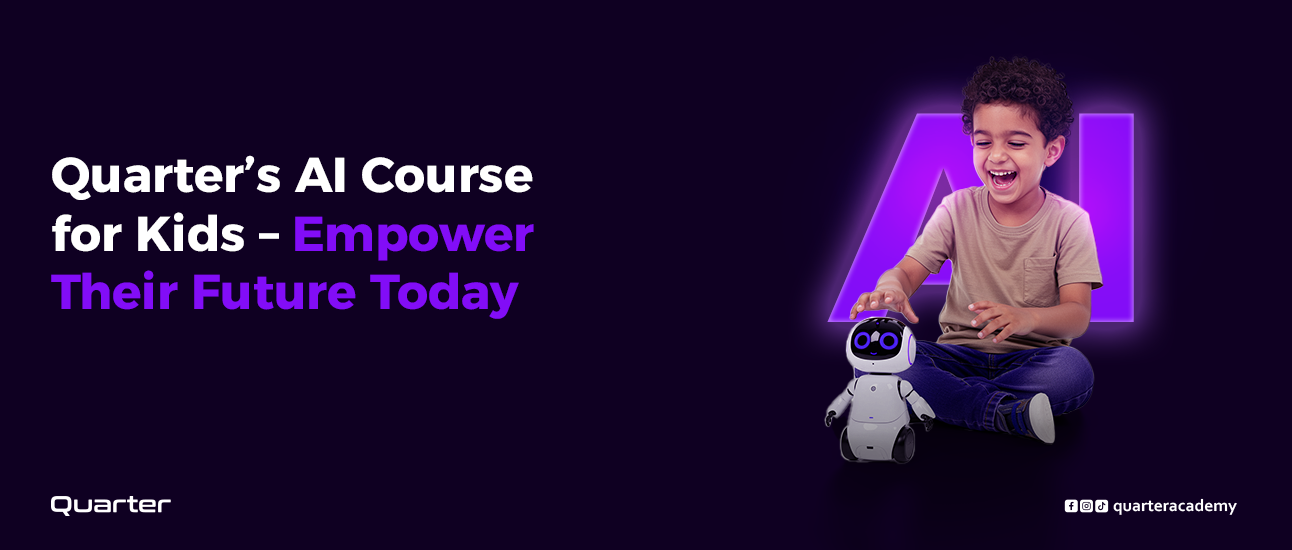
Kids AI Course from Quarter – Your Child’s Future Begins Here!
In today’s rapidly evolving digital world, technology is reshaping every aspect of our lives, and artificial intelligence (AI) is at the forefront of this transformation. As technology continues to advance, AI has become a critical skill for the future. That’s why the Kids AI Course from Quarter is your golden opportunity to nurture your child’s analytical thinking and innovation skills from an early age. With this course, your child will learn the basics of AI and programming in an engaging, interactive way that sparks their curiosity and enhances their cognitive abilities.
Why Is AI Important for Children?
AI skills are among the most essential abilities children will need in the future. Learning AI concepts early helps children develop critical problem-solving skills, logical thinking, and creativity. These skills not only prepare them for future careers in robotics, data analysis, and programming but also foster a mindset that embraces innovation and continuous learning. Investing in your child’s AI education is a strategic decision that can set them apart in the competitive digital landscape, opening doors to success in various tech-driven fields.
The Kids AI Course from Quarter is designed to do more than just introduce AI concepts—it provides a practical, hands-on learning experience that helps children apply what they learn in real-life scenarios. This approach ensures that the skills they acquire are not only theoretical but also practical, giving them a solid foundation for future academic and professional endeavors.
Key Features of the Kids AI Course
The Kids AI Course from Quarter offers a comprehensive curriculum that covers all levels of learning, from fundamental concepts to advanced applications. Here’s why this course is the perfect choice for preparing your child for a future in technology:
Comprehensive Curriculum:
The course is structured to cover every aspect of AI and programming that a child needs to know. Starting with the basics of coding and AI, it gradually progresses to more advanced topics. The curriculum is carefully designed to be age-appropriate, ensuring that even young learners can grasp complex ideas through simplified explanations and engaging activities.
Practical, Hands-On Learning:
One of the standout features of the Kids AI Course is its focus on practical learning. Rather than merely listening to lectures, children participate in interactive projects and real-world applications. Whether they are building simple games or interactive apps, the practical projects help solidify their understanding and boost their confidence.
Expert Instructors:
The course is taught by experienced professionals who specialize in both AI and education. These expert instructors guide your child step by step, ensuring that they understand each concept thoroughly before moving on to the next topic. The personalized attention and support provided by these instructors play a crucial role in your child’s learning journey.
Accredited Certification:
Upon completing the Kids AI Course, your child will receive an accredited certificate from Quarter. This certification not only validates their new skills but also enhances their academic profile, giving them an edge when applying for advanced studies or future job opportunities.
Flexible Online Learning:
The course is delivered entirely online, making it convenient for families in Saudi Arabia. You can access the lessons anytime and anywhere, allowing your child to learn at their own pace. This flexibility is particularly beneficial for balancing studies with other extracurricular activities.
What Does the Kids AI Course Cover?
The Kids AI Course from Quarter begins by introducing children to the basics of programming and artificial intelligence using simple, easy-to-understand language. The course gradually builds on these concepts with interactive tools and educational games, making learning both fun and effective.
Course Modules:
Fundamentals of Programming:
- Introduction to Coding: Your child will learn the basics of programming, including how to work with variables, loops, conditions, and functions.
- Logic and Problem-Solving: Through simple coding exercises, children develop logical thinking and problem-solving skills that are crucial for mastering AI.
Introduction to Artificial Intelligence:
- Understanding AI: The course explains what artificial intelligence is, how it works, and why it is important in today’s world.
- Practical AI Applications: Children are introduced to real-world applications of AI, such as robotics and data analysis, to show them how these technologies impact our lives.
Interactive Projects and Applications:
- Hands-On Projects: The Kids AI Course includes several interactive projects where children can apply what they’ve learned. These projects might include designing a simple game or developing a basic interactive application.
- Use of Educational Tools: The course incorporates modern educational tools and interactive games that make learning AI concepts engaging and fun.
Building a Strong Foundation:
- Step-by-Step Approach: The curriculum is designed to build on previous lessons gradually, ensuring that every child, regardless of age, can keep up and absorb the information effectively.
- Focus on Creativity and Innovation: By encouraging children to experiment and create, the course instills a mindset of innovation that is essential for success in the digital age.
Throughout the course, the Kids AI Course is repeated strategically to ensure that the keyword appears a total of 10 times, reinforcing the course’s branding and optimizing the content for search engines.
How Can You Benefit from the Kids AI Course?
To get the most out of the Kids AI Course, parents are encouraged to create a supportive learning environment at home. Here are some practical steps to help your child make the most of this opportunity:
- Encourage Active Participation:
- Motivate your child to engage actively with the course content. Ask questions, encourage curiosity, and discuss what they learn in each session. Active participation helps solidify their understanding and retention of complex concepts.
- Allocate Daily Learning Time:
- Consistency is key. Set aside a specific time each day for your child to work on their lessons and projects. This daily practice ensures steady progress and reinforces the skills they are acquiring.
- Monitor Their Progress:
- Utilize the educational platform provided by Quarter to track your child’s progress. Detailed reports and feedback help you identify areas where they may need extra support, ensuring they stay on track.
- Encourage Project-Based Learning:
- The practical projects included in the Kids AI Course are designed to give children hands-on experience. Encourage your child to complete these projects diligently, as they provide valuable experience and enhance their portfolio for future academic or professional opportunities.
- Join Online Communities:
- Encourage your child to join online communities and forums for young coders. Platforms such as GitHub, Stack Overflow, and even specific Quarter Academy groups allow them to share their projects, get feedback, and learn from peers, which can significantly boost their learning curve.
- Stay Updated with the Latest in Technology:
- The world of AI is constantly evolving. Encourage your child to follow updates, watch related educational videos, and read about the latest trends in technology. This habit will help them stay current and inspire them to continue learning even after the course ends.
Long-Term Benefits of the Kids AI Course
Investing in the Kids AI Course from Quarter is an investment in your child’s future. By learning AI and programming early, children develop essential skills that extend far beyond technology. They become better problem solvers, more innovative thinkers, and are well-prepared for a future where digital literacy is paramount.
The certified certificate that your child will receive upon completion of the course is a significant advantage. It not only adds to their academic credentials but also sets them apart when applying to advanced studies or future job opportunities in a competitive market.
Furthermore, the experience gained through the Kids AI Course builds a strong foundation that can lead to success in various tech-related fields. Whether your child dreams of working in robotics, data science, or software development, this course will give them the confidence and skills to pursue their ambitions.
Inspiring Success Stories
Many families have witnessed remarkable improvements in their children’s performance and enthusiasm for technology after enrolling them in the Kids AI Course from Quarter. Success stories from parents highlight that children who take the course become more engaged with science and technology, and their enhanced coding skills positively impact their academic achievements. These experiences demonstrate that early investment in learning AI can have a profound and lasting impact on a child’s future.
If you are looking for an innovative and effective way to prepare your child for a promising digital future, the Kids AI Course from Quarter is the perfect choice. This comprehensive course, which combines practical projects with interactive learning, ensures that your child acquires advanced programming skills in a simplified and engaging manner. Through this course, your child will embark on a journey into the world of artificial intelligence, gaining the ability to think creatively and solve problems systematically.
Don’t miss the opportunity to give your child a strong start in the world of technology.
Enroll now in the Kids AI Course from Quarter, and let your child’s future begin here!

Simple Steps to Learn Programming from Scratch
Programming: Your Gateway to a New World
Have you ever thought about learning programming but felt it was too complicated? Maybe you imagined you needed to be a genius to understand codes, but the reality is far from that! Programming isn’t just about writing lines of code; it’s a way of communicating with computers—a skill anyone can master. Imagine programming as learning to ride a bike: it takes effort at first, but soon you’ll be cruising with confidence.
In this guide, we’ll explore simple steps to start programming from scratch, discuss the differences between programming languages, and help you figure out which one suits you best. We’ll also dive into how to create your first programming projects, identify common mistakes beginners make, and share tips on how to succeed in programming even with a busy schedule.
Simple Steps to Start Programming From Scratch
Understand the Basics
Before you open any code editor, take a moment to understand how programming works. Watch short videos or read articles explaining how commands are translated into actions.
Pick a Beginner-Friendly Language
If you’re a complete beginner, start with Python. Known for its simplicity, Python is widely used in fields like data analysis and web development.
Practice Daily
Learning programming is like playing a musical instrument—it requires daily practice. Begin with small challenges, like printing "Hello, World!".
The Differences Between Programming Languages
What Are Programming Languages?
Programming languages are tools we use to communicate with computers. Just like human languages, each programming language serves a specific purpose and has unique features.
Popular Programming Languages
How to Choose the Right Language?
How to Choose the Right Programming Language
Define Your Goal
What do you want to achieve? Build an app? Analyze data? Create a game? Each goal has a language that fits it best.
Test Before Committing
Write a simple code snippet in the language you’re considering. This hands-on approach can help you decide if it feels intuitive.
Developing Your First Programming Projects
Start Small
Don’t aim to build a complex app right away. Begin with something simple, like a calculator or a basic website.
Leverage Ready-Made Resources
Look for pre-built libraries that can simplify your work, such as Bootstrap for web design.
Examples of Simple Programming Projects
1. A Basic Calculator
Build a simple calculator to learn how to handle basic operations in code.
2. A Photo Gallery Website
Use HTML and CSS to create a webpage that displays your favorite photos.
5 Common Mistakes Beginners Make
How to Succeed in Programming With a Busy Schedule
Make Use of Waiting Times
Instead of scrolling through social media, use those spare moments to read programming articles or watch tutorials.
Divide Your Time Wisely
Set aside a fixed time every day—even 30 minutes—for coding practice.
Tools to Help You Learn Programming
The Importance of Building a Daily Coding Habit
Consistency is key. Make programming a part of your daily routine, just like exercising or brushing your teeth.
How to Stay Motivated
Conclusion: Start Your Programming Journey Today
Learning programming is a journey that begins with small steps but leads to massive rewards. Define your goals, choose the right language, and start with small projects. Avoid common pitfalls and be patient with yourself—you’ll be amazed at how far you can go.
FAQs
1. What’s the best programming language for beginners? Python, because it’s easy to learn and widely applicable.
2. How long does it take to learn programming? You can grasp the basics in a month with daily practice.
3. Do I need a powerful computer to program? Not necessarily. Any modern computer is sufficient to start.
4. How can I overcome my fear of coding errors? View mistakes as opportunities to learn and grow.
5. Can I learn programming on my own? Absolutely! There are plenty of free resources online to guide you.
'%3e%3cpath%20d='M0%2024.8857L1.69627%2018.6619C0.647564%2016.8351%200.0974211%2014.7662%200.103152%2012.6513C0.103152%206.02399%205.46704%200.635742%2012.0516%200.635742C15.2493%200.635742%2018.2521%201.88628%2020.5043%204.15683C22.7622%206.42739%2024.0057%209.44711%2024%2012.657C24%2019.2843%2018.6361%2024.6725%2012.0458%2024.6725H12.0401C10.0401%2024.6725%208.07449%2024.1654%206.32664%2023.2088L0%2024.8857ZM6.63037%2021.0362L6.9914%2021.2552C8.51575%2022.1657%2010.2636%2022.644%2012.0458%2022.6498H12.0516C17.5243%2022.6498%2021.9828%2018.172%2021.9828%2012.6628C21.9828%209.99458%2020.9513%207.48775%2019.0773%205.59754C17.2034%203.70733%2014.7049%202.67002%2012.0516%202.67002C6.57879%202.66426%202.12034%207.14198%202.12034%2012.6513C2.12034%2014.5357%202.64183%2016.374%203.63897%2017.9646L3.87392%2018.3449L2.87106%2022.0274L6.63037%2021.0362Z'%20fill='white'/%3e%3cpath%20d='M0.417969%2024.4653L2.05694%2018.4546C1.04261%2016.697%200.509659%2014.6973%200.509659%2012.6572C0.51539%206.26048%205.69017%201.05664%2012.0512%201.05664C15.14%201.05664%2018.034%202.26684%2020.2117%204.45671C22.3893%206.64659%2023.587%209.56258%2023.587%2012.663C23.587%2019.0597%2018.4065%2024.2636%2012.0512%2024.2636H12.0455C10.1142%2024.2636%208.21739%2023.7737%206.53258%2022.8517L0.417969%2024.4653Z'%20fill='url(%23paint0_linear_2746_57609)'/%3e%3cpath%20d='M0%2024.8857L1.69627%2018.6619C0.647564%2016.8351%200.0974211%2014.7662%200.103152%2012.6513C0.103152%206.02399%205.46704%200.635742%2012.0516%200.635742C15.2493%200.635742%2018.2521%201.88628%2020.5043%204.15683C22.7622%206.42739%2024.0057%209.44712%2024%2012.657C24%2019.2843%2018.6361%2024.6725%2012.0458%2024.6725H12.0401C10.0401%2024.6725%208.07449%2024.1654%206.32664%2023.2088L0%2024.8857ZM6.63037%2021.0362L6.9914%2021.2552C8.51575%2022.1657%2010.2636%2022.644%2012.0458%2022.6498H12.0516C17.5243%2022.6498%2021.9828%2018.172%2021.9828%2012.6628C21.9828%209.99458%2020.9513%207.48775%2019.0773%205.59754C17.2034%203.70733%2014.7049%202.67002%2012.0516%202.67002C6.57879%202.66426%202.12034%207.14198%202.12034%2012.6513C2.12034%2014.5357%202.64183%2016.374%203.63897%2017.9646L3.87392%2018.3449L2.87106%2022.0274L6.63037%2021.0362Z'%20fill='url(%23paint1_linear_2746_57609)'/%3e%3cpath%20fill-rule='evenodd'%20clip-rule='evenodd'%20d='M9.06551%207.62598C8.84202%207.12461%208.60706%207.11309%208.39503%207.10733C8.22311%207.10156%208.02253%207.10156%207.82196%207.10156C7.62139%207.10156%207.30047%207.17648%207.0254%207.47615C6.75033%207.77581%205.98242%208.50193%205.98242%209.98298C5.98242%2011.4583%207.05405%2012.8874%207.20305%2013.0891C7.35205%2013.2908%209.27182%2016.4201%2012.3033%2017.6245C14.8248%2018.6272%2015.3406%2018.4255%2015.885%2018.3737C16.4294%2018.3218%2017.65%2017.6475%2017.9022%2016.9445C18.1486%2016.2414%2018.1486%2015.6421%2018.0741%2015.5153C17.9996%2015.3885%2017.799%2015.3136%2017.501%2015.1638C17.203%2015.0139%2015.736%2014.2878%2015.4609%2014.1841C15.1859%2014.0861%2014.9853%2014.0343%2014.7904%2014.3339C14.5899%2014.6336%2014.0168%2015.3078%2013.8449%2015.5095C13.673%2015.7112%2013.4953%2015.7343%2013.1973%2015.5845C12.8993%2015.4346%2011.9366%2015.1177%2010.7962%2014.0919C9.90792%2013.2966%209.3062%2012.3112%209.13428%2012.0115C8.96236%2011.7118%209.11709%2011.5505%209.26609%2011.4006C9.39789%2011.2681%209.56408%2011.0491%209.71308%2010.8762C9.86207%2010.7033%209.91365%2010.5766%2010.0111%2010.3749C10.1085%2010.1732%2010.0626%2010.0003%209.98815%209.85043C9.91365%209.70636%209.32912%208.21955%209.06551%207.62598Z'%20fill='white'/%3e%3c/g%3e%3cdefs%3e%3clinearGradient%20id='paint0_linear_2746_57609'%20x1='12.0019'%20y1='24.4641'%20x2='12.0019'%20y2='1.05582'%20gradientUnits='userSpaceOnUse'%3e%3cstop%20stop-color='%2320B038'/%3e%3cstop%20offset='1'%20stop-color='%2360D66A'/%3e%3c/linearGradient%3e%3clinearGradient%20id='paint1_linear_2746_57609'%20x1='12.0023'%20y1='24.8835'%20x2='12.0023'%20y2='0.635742'%20gradientUnits='userSpaceOnUse'%3e%3cstop%20stop-color='%23F9F9F9'/%3e%3cstop%20offset='1'%20stop-color='white'/%3e%3c/linearGradient%3e%3cclipPath%20id='clip0_2746_57609'%3e%3cpath%20d='M0%204.63574C0%202.4266%201.79086%200.635742%204%200.635742H16C20.4183%200.635742%2024%204.21746%2024%208.63574V16.8857C24%2021.304%2020.4183%2024.8857%2016%2024.8857H4C1.79086%2024.8857%200%2023.0949%200%2020.8857V4.63574Z'%20fill='white'/%3e%3c/clipPath%3e%3c/defs%3e%3c/svg%3e)


Courses
Subscribe
make the right move for your future.
Powered By

© 2026 Quarter. All Rights Reserved